Affiliate Disclosure: Welcome! Before we dive in, please note that some of the links in this article are affiliate links. This means that as an Amazon Associate, I earn from qualifying purchases if you click through and buy something. This comes at absolutely no additional cost to you, and it helps me keep creating helpful content for this site. Thank you for your support!
Hi everyone, and welcome back to the blog! If you have been following my journey, you will know how much I love heading out with my camera. But when I talk about capturing nature, I don’t just mean our beautiful UK wildlife—I mean the entire natural world. To me, nature is the whole living landscape. It is the raw weather, the ancient earth, and those quiet spaces where time stands still. Today, I want to take you to some of the most atmospheric places in the UK where the natural world and deep history collide: sharing my personal tips for photographing uk sacred sites.
For many years, UK sacred sites have held a deeply special place in my heart. When my two children were growing up, our holidays were defined by these magical places. We would pile the car high with camping gear, load up our two dogs, and head out to explore the mysteries of Glastonbury, Avebury, Castlerigg, the Rollright Stones, and Arbor Low amongst many other places.
When my children were growing up, our family camping trips were defined by these ancient, magical places. Looking back, I realize we were unconsciously following a trail of ancient energy. I call them the Seven Stars: seven profound sacred landscapes across the UK, marked by seven stones, with one stone standing for each of our seven historic sites. Today, I want to show you how to capture the raw emotion of these locations with your camera.
I have so many vivid memories from those years. I will never forget one particularly wild, windy day climbing up Glastonbury Tor, the kids jumping up in the wind to be purposely almost blown away. Yet, I also remember the perfect, beautiful weather on other visits—sitting peacefully at the top, or walking quietly around the massive stone circles, trying to meditate, slow down, and truly connect with the Earth beneath my feet.
As photographers, wildlife teaches us patience, but landscape photography at these ancient sites teaches us how to capture feeling. You don’t need an expensive trip abroad or high-end corporate gear to capture the haunting, majestic atmosphere of these landmarks. Just like our wildlife shoots, all it takes is a curious eye, a bit of patience, and learning to sit quietly with the history around us.
In this guide, I’m going to share some simple, budget-friendly tips on how you can use basic camera settings to capture the raw, emotional atmosphere of the UK’s sacred sites—and how to weave your own connection into the frame.
1. The Silhouette of Avalon: Capturing Glastonbury Tor
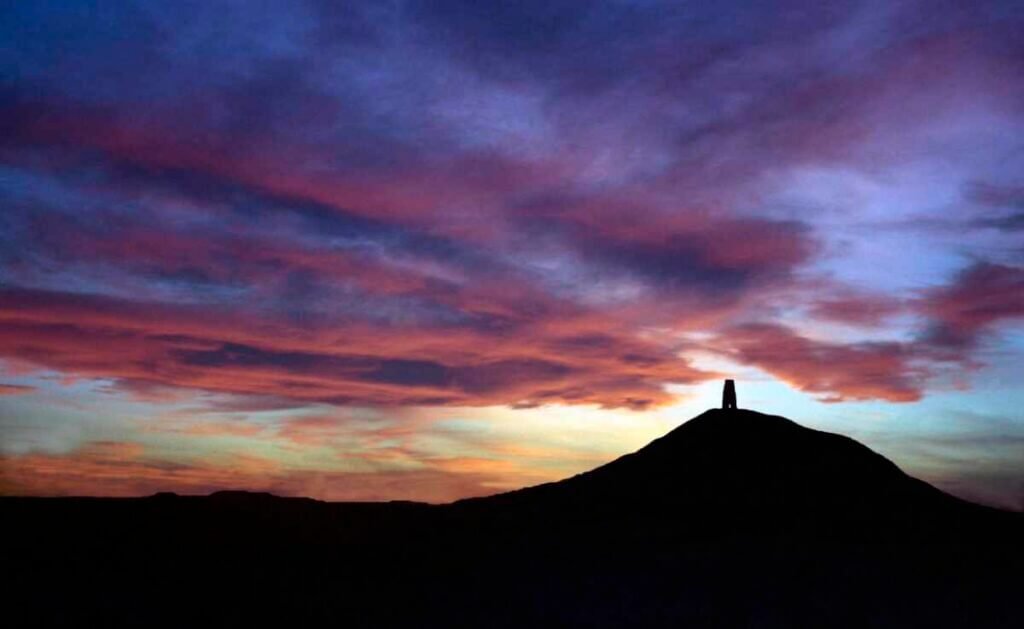
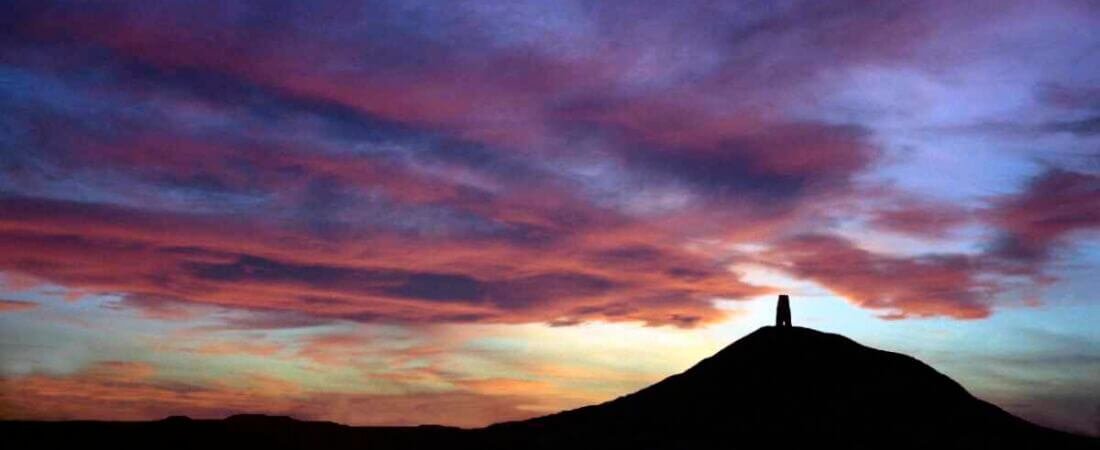
There is something undeniably magical about the silhouette of St Michael’s Tower standing guard on top of Glastonbury Tor. It is a place of myths, legends, and for me, unforgettable family memories.
The Story Behind the Shot:
This location can experience incredibly intense weather. Whenever I think of the Tor, I alternate between remembering that beautiful, calm weather where we sat peacefully at the peak, and that wildly windy day where my children were playfully enjoying being almost blown away in the gales!
When you want to capture the true atmosphere of the Tor, shooting from a distance at sunrise or sunset is highly effective. By positioning yourself at the base of the hill as the sun goes down, you can isolate the tower against a dramatic sky. Waiting until a lone walker passes the summit adds a brilliant sense of scale to the massive hill.
The “Seven Stones” Anchor:
The stone marker for this sacred hill is the towering St. Michael’s Tower itself. Standing completely alone on the high summit ridge, its ancient, weathered stone blocks form a spectacular, majestic silhouette against the rising sun.
My Real-World Settings:
- Camera Body: Canon EOS 70D
- Lens Used: 100-400mm kit lens (zoomed in to compress the hill against the sky)
- Camera Mode: Aperture Priority
- Shutter Speed: 1/200s
- Aperture: f/8 for sharp detail across the entire landscape
- ISO: 200 for a clean image with minimal digital noise
Pro Photography Tip & Behind-the-Scenes:
Sometimes the weather doesn’t cooperate, but you can still create the mood you felt! The sky in my Glastonbury Tor photo is actually a composite. I captured the perfect silhouette of the Tor on a flat day, but later blended it with a dramatic, vibrant sunset sky I took back home up the Turpin footpath. Don’t be afraid to experiment with digital blending to bring your artistic vision of these sacred landscapes to life!
2. The Whispering Monoliths: Capturing Stonehenge
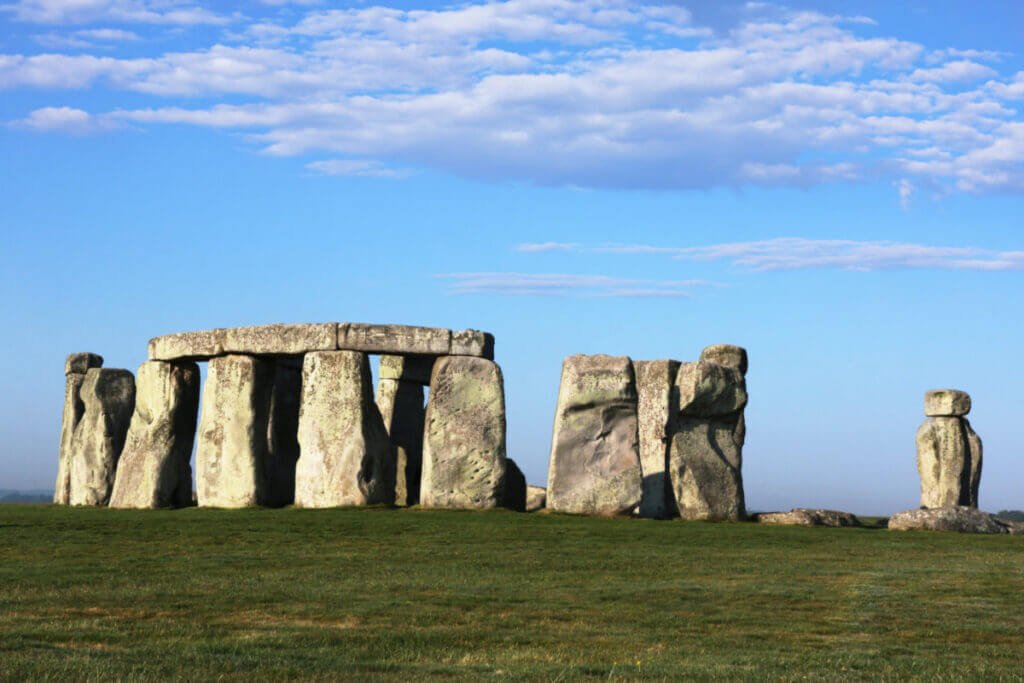
There is no prehistoric monument on earth quite like Stonehenge. Standing on the wide expanse of the Salisbury Plain, its massive lintel-topped pillars have mystified and inspired travelers for thousands of years.
The Story Behind the Shot:
I have been fortunate enough to visit Stonehenge several times over the years, but one spontaneous trip stands out above the rest. I woke up one morning with an overwhelming, intense pull to visit the monument—an almost magnetic feeling that I simply couldn’t ignore. I hopped in the car and made the 4.5-hour journey entirely on impulse.
When I arrived at the visitor center, I checked the ticket office on a whim to see if they had any late-booking spaces for the exclusive, paid Stone Circle Access. Amazingly, luck was on my side and they had a spot! Waiting for the site to close to the general public was filled with anticipation.
Walking around the outer perimeter while waiting for our timed entry was incredible, but stepping into the inner circle after public closure was a truly unforgettable experience. While strict rules mean you are absolutely not allowed to touch or climb on the ancient stones, and a guard keeps a watchful eye nearby, the energy is palpable. I remember holding my hand just inches away from the rough sarsen rock and feeling a powerful, undeniable vibration radiating from the deep past.
When shooting inside the circle during these exclusive sessions, focus on the sheer scale of the rocks towering above you. Because your time inside is limited, use a wide-angle lens to capture the framing of the stones against the open sky, and look for low angles that emphasize their historical weight.
The “Seven Stones” Anchor:
Our star marker for this global icon is the massive Heel Stone. Standing completely solitary just outside the main circle entrance, this raw, unshaped sarsen boulder is the exact stone that lines up beautifully with the midsummer sunrise.
My Real-World Settings:
- Camera Body: Canon EOS 70D
- Lens Used: 18-200mm lens (shot wide to fit the expansive horizon)
- Camera Mode: Aperture Priority Shutter
- Speed: 1/320s (automatically balanced for daylight)
- Aperture: f/8 to capture the incredible, craggy textures of the stones and keep the distant clouds sharp
- ISO: 100 for deep, natural blue sky gradients and clean, noise-free stone details
Pro Photography Tip:
Because the Salisbury Plain offers zero shelter, the light shifts across the open grass rapidly. If you are shooting from outside the ropes or during standard hours, try using the long shadows cast by the outlying Heel Stone or Slaughter Stone to frame your composition and create leading lines toward the main circle.
3. The Giant’s Playground: Capturing Avebury
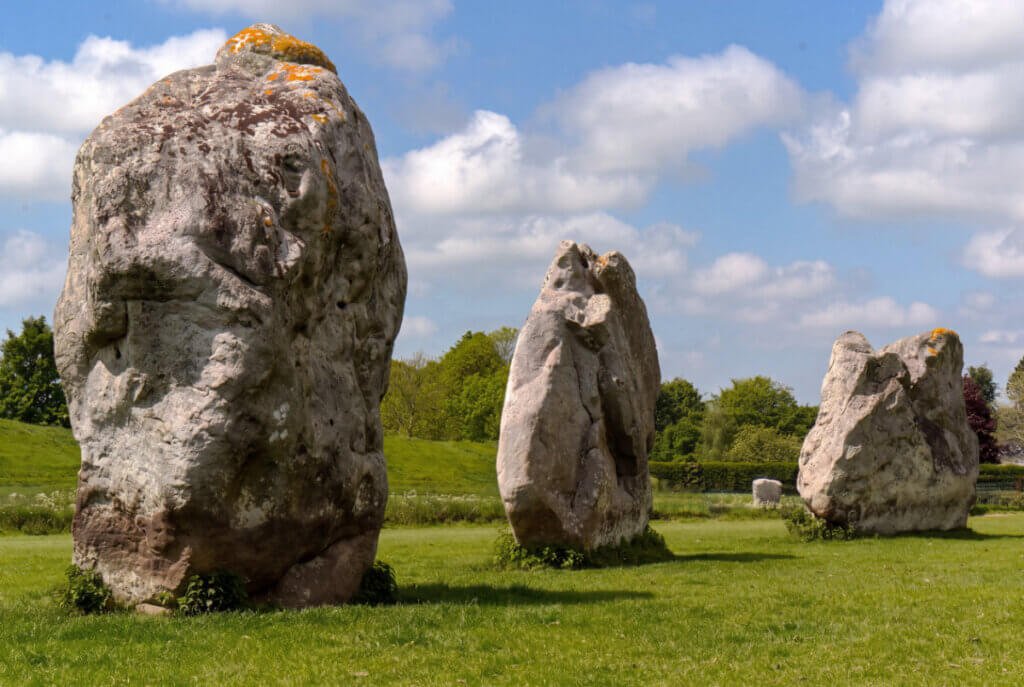
While Stonehenge is world-famous, Avebury holds a completely unique place in my heart. As the largest prehistoric stone circle in the world, it doesn’t stand isolated behind ropes—instead, the ancient stones sit wrapped directly around a living, breathing Wiltshire village, complete with a thatched pub, a quiet church, and grazing sheep.
The Story Behind the Shot:
Our family trips to Avebury were always filled with laughter. Unlike sites where you have to view the history from a distance, here, the children could walk right up to the massive, craggy sarsen stones. I will always remember loading up the car with our gear, packing up the dogs, and spending hours wandering the deep earthen banks. The children used to play hide-and-seek behind the giant pillars while the dogs happily investigated every blade of grass.
For me, Avebury is a place where you can easily find a quiet corner, sit in the grass, and try to meditate. Touching the rough, cold stone while hearing the wind rustle through the nearby trees gives you an incredible, grounding connection to the Earth beneath your feet.
The main challenge for photographers at Avebury is its sheer scale—the outer circle is so massive that it is impossible to fit into a single standard frame. To capture its true spirit, I like to use a wide-angle lens and get down very low to the ground. By placing one of the massive stones on the edge of your frame, you can use the deep chalk ditch and bank as a natural leading line to guide the viewer’s eye through the landscape.
Because the prehistoric stones sit directly wrapped around a living Wiltshire village, you can find helpful walking maps at the National Trust Avebury Center to plan your composition angles.
The “Seven Stones” Anchor:
The standout star marker for this vast landscape is The Swindon Stone. Unlike the paired entrance stones, this massive, lonely monolith stands guard right at the northern edge of the circle next to the road, weighing an estimated 65 tonnes. Its craggy, diamond-like silhouette makes it the perfect anchor point for a dramatic landscape composition.
My Real-World Settings:
- Camera Body: Canon EOS 70D
- Lens Used: 18-200mm kit lens (shot wide at 18mm to capture the sweeping earthworks)
- Camera Mode: Aperture Priority
- Shutter Speed: 1/100s (automatically balanced by the camera for clean daylight)
- Aperture: f/11 for deep, maximum sharpness from the textures of the closest stone all the way to the distant cottage roofs
- ISO: 100 for a perfectly clean, crisp image with no digital noise
Pro Photography Tip:
Because Avebury is an active pasture, the sheep love to shelter in the shadows of the massive stones. Wait patiently until a few sheep wander into the frame near the base of a monolith. The contrast between the soft white wool of the animals and the dark, ancient, craggy sarsen stone adds a brilliant sense of scale, life, and timelessness to your final photo.
4. The Whispering Knights: Capturing the Rollright Stones
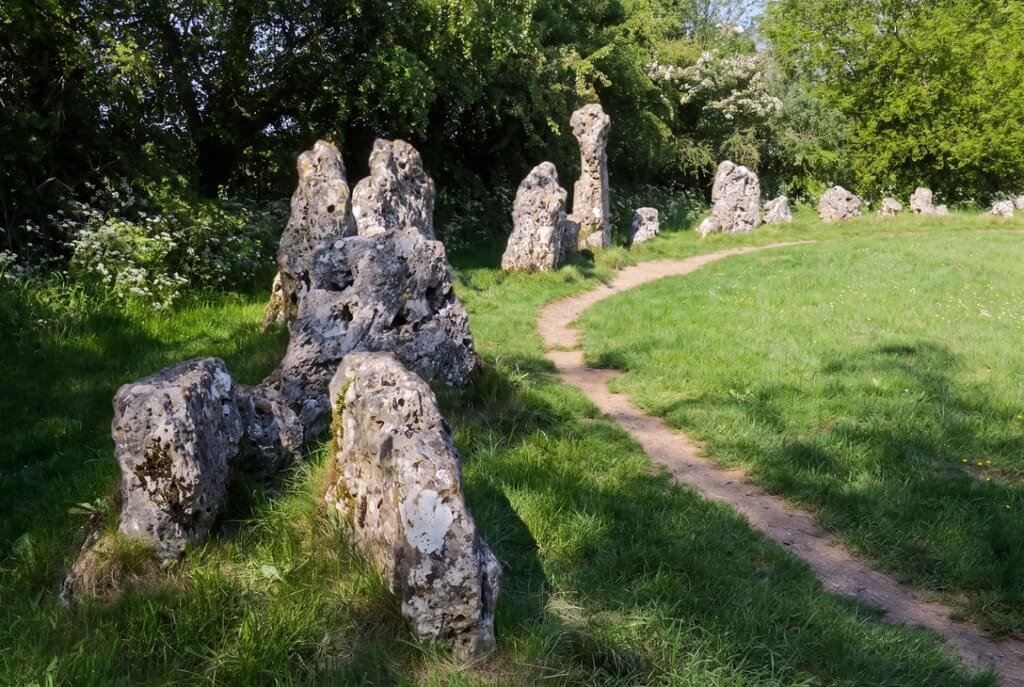
Perched on a lonely limestone ridge on the border of Oxfordshire and Warwickshire, the Rollright Stones are an intimate, deeply atmospheric complex. Composed of three distinct monuments spanning thousands of years of history, this site feels entirely detached from the modern world.
The Story Behind the Shot:
Visiting the Rollrights always brings back fond memories of our family trips. Because this circle is relatively compact and tucked away behind a screen of low trees, it feels like a secret garden. I remember piling the kids and dogs out of the car after a long drive and watching the children instantly become captivated by the folklore here. Local legend says these are a king and his army turned to stone by a witch—and that it is impossible to count the stones and get the same number twice!
While the kids playfully tried to count the moss-covered rocks, I remember finding a quiet spot to simply sit in the grass, slow down, and breathe. There is an unmistakable, quiet energy here that makes it a perfect place to meditate and truly connect with the earth.
From a photography perspective, the close spacing of the stones means your frame can easily look cluttered. The trick is to use a mid-range focal length and focus on the incredible, heavily weathered shapes of the individual rocks. Look for windows where the sunlight breaks through the surrounding trees to illuminate the deep, craggy holes in the limestone.
The “Seven Stones” Anchor:
Our distinct star marker for this location is The King Stone. Standing entirely solitary across the road from the main circle, this massive, 8-foot-tall monolith looks like a haunting, abstract statue. Its highly unusual, twisted shape—battered by centuries of storms—creates an incredibly powerful, dramatic silhouette against the open sky.
My Real-World Settings:
- Camera Body: Canon EOS 70D
- Lens Used: 18-200mm kit lens (shot at around 24mm to isolate the King Stone)
- Camera Mode: Aperture Priority
- Shutter Speed: 1/160s (automatically selected by the camera)
- Aperture: f/8 to ensure the complex, pitted textures of the ancient limestone are perfectly sharp
- ISO: 200 to keep the image sharp and clean, even under the shifting light of the ridge
Pro Photography Tip:
The Rollright Stones are surrounded by a ring of trees that cast long, dramatic shadow patterns across the site during the late afternoon. Instead of fighting these shadows, use them! Position your camera low to the ground and use the alternating bands of light and dark across the grass as natural lines that lead the viewer’s eye straight toward the twisted shape of the King Stone.
5. The Legend of the Wizard: Capturing Alderley Edge
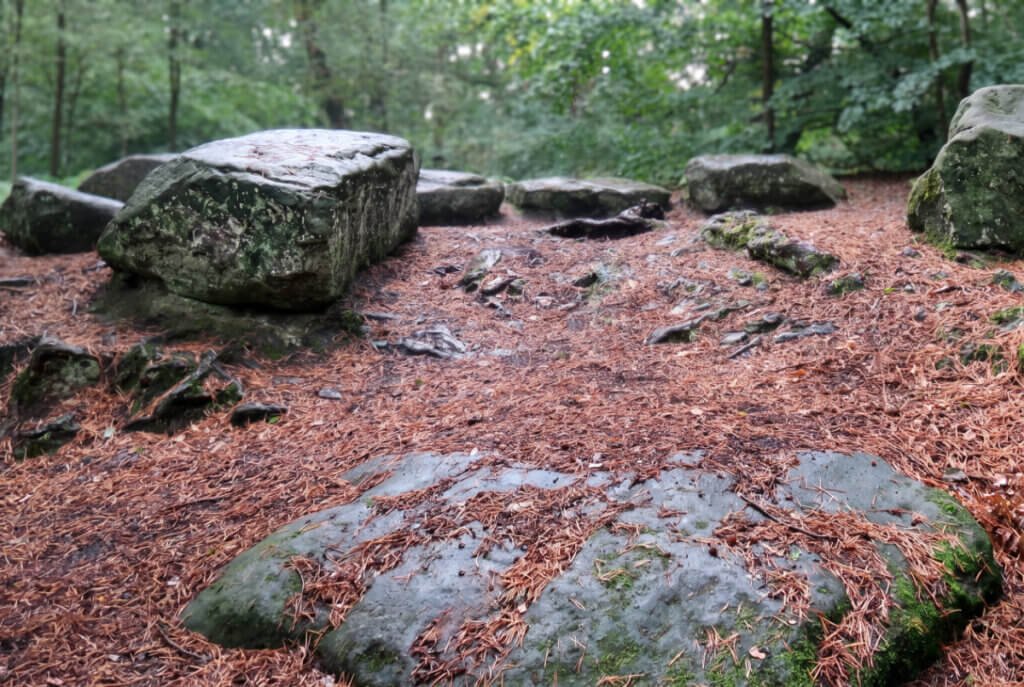
Breaking away from traditional open plains, Alderley Edge shifts our journey into a dramatic sandstone cliff wrapped in dense, ancient Cheshire woodland. Swapping open skies for a thick canopy, this is a place steeped in Arthurian legend, tales of sleeping knights, and hidden wizard magic.
The Story Behind the Shot:
Alderley Edge holds a special place in my heart, evolving from a vibrant family playground where my children and dogs explored ancient, leaf-strewn woods into a sanctuary for my own quiet meditation. This transformation allowed me to connect deeply with the landscape, finding it to be a true “thin place” in the Celtic tradition—a spot where the veil between the physical and spiritual worlds is exceptionally fragile.
Sitting on the edge of the cliffs overlooking the Cheshire Plains, I find a profound sense of “home” and peace. It is in this stillness that I truly connect with the ancient earth, capturing the spirit of the location within my frame.
The “Seven Stones” Anchor:
Our anchor point for this woodland landscape is the legendary Golden Stone. Tucked away within the canopy, this historic rock is wrapped in local myth and boundary lore. Its smooth, moss-slicked surface catching a stray beam of forest sunlight serves as our perfect, hidden star marker within the trees.
My Real-World Settings:
- Camera Body: Canon EOS R10
- Lens Used: RF-S 18-45mm kit lens
- Camera Mode: Aperture Priority
- Shutter Speed: 1/500s (essential to instantly freeze the movement of branches and leaves swinging in the forest breeze)
- Aperture: f/8 to create a softly blurred background that makes the textures of the stone pop
- ISO: 400 to compensate for the deep, heavy shadow patterns created by the overhanging canopy
Pro Photography Tip:
Alderley Edge is spectacular to photograph on a damp, overcast, or slightly misty morning. The moisture makes the red sandstone look incredibly rich and vibrant, while a layer of mist softens the background trees, stripping away modern distractions and leaving you with a haunting, ethereal fairy-tale atmosphere.
6. The Stonehenge of the North: Capturing Arbor Low
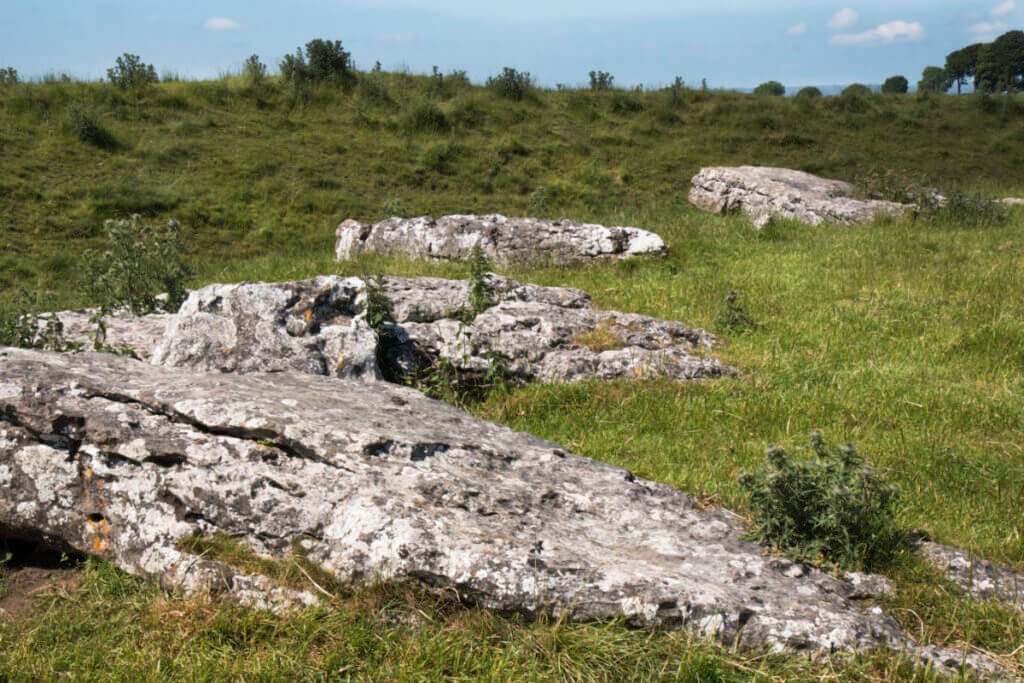
Perched high on a windswept, lonely plateau in the heart of the Derbyshire Peak District, Arbor Low is one of the most enigmatic sacred sites in Britain. What makes this Neolithic monument entirely unique is that all its massive limestone pillars lie completely flat, radiating outwards like a giant, fallen clock face enclosed within a massive earthen bank.
The Story Behind the Shot:
Our family camping trips into Derbyshire always included a pilgrimage up the farm track to Arbor Low. I will always remember the feeling of loading up our gear and stepping out into that vast, open landscape. The children loved running along the high, circular grass ramparts, while our dogs happily sniffed their way through the wild clover and grass.
Because Arbor Low is far less commercialised than southern sites, you often have the entire place completely to yourself. It is a deeply spiritual space where I love to slow down, find a flat limestone slab to sit on, and try to meditate. Sitting there with the wind whipping over the ridge, watching the clouds fly past while touching stones that have rested there for thousands of years, gives you an unforgettable connection to the Earth.
The photography challenge here is the lack of height, as the fallen stones can easily disappear into the landscape from eye level. To overcome this, climb up onto the high surrounding earthen bank. This elevated viewpoint lets you look down into the henge, allowing your lens to capture the full, poetic layout of the fallen giants against the sweeping green horizons.
The “Seven Stones” Anchor:
The standout star marker for this windswept plateau is the giant Central Cove Monoliths. Lying fallen right at the very heart of the circle, these massive, pale limestone blocks are the ruins of an ancient inner sanctuary chamber. They provide a powerful, pale visual anchor point that immediately draws the eye to the center of your frame.
My Real-World Settings:
- Camera Body: Canon EOS 70D
- Lens Used: Wide-angle setting (to capture both the circular earthworks and the vast sky)
- Camera Mode: Aperture Priority
- Shutter Speed: 1/320s (automatically selected by the camera for bright daylight)
- Aperture: f/11 for deep, corner-to-corner clarity that keeps the pale stones sharp all the way to the distant drystone walls
- ISO: 125 for an ultra-clean, noise-free landscape shot
Pro Photography Tip:
Arbor Low is highly sensitive to the angle of the sun. Because the stones are flat to the ground, photographing them at midday can leave the scene looking flat and featureless. Visit during the “golden hour” just before sunset. The low-angled sun casts long, dramatic shadows from the earthen banks and catches the rugged edges of the fallen limestone, instantly bringing the entire circle to life.
7. The Mountain Guardians: Capturing Castlerigg Stone Circle
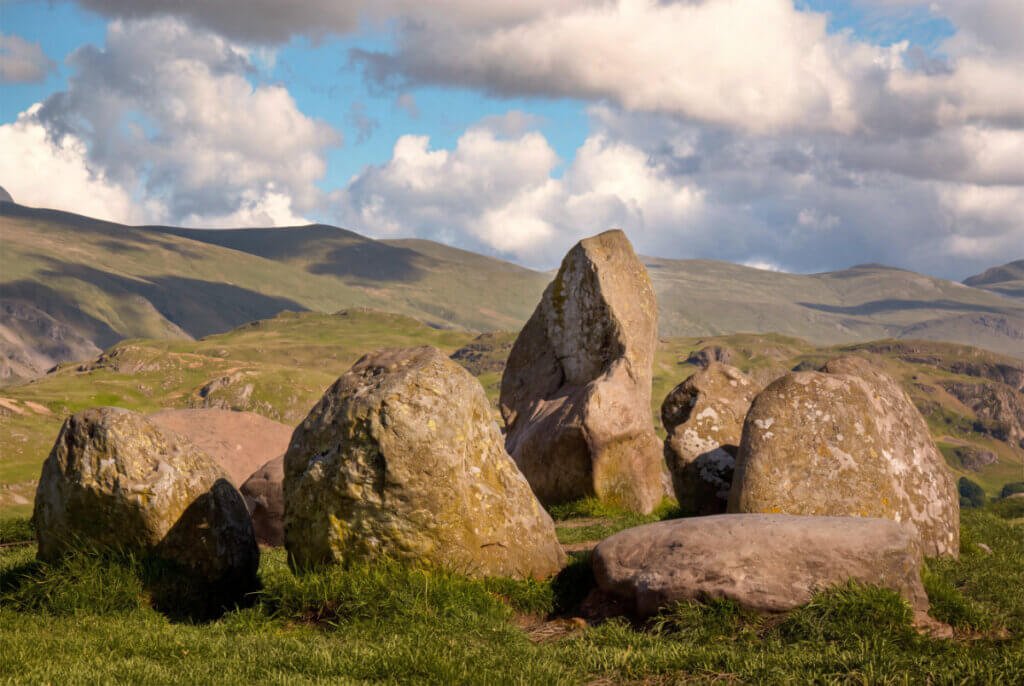
Nestled in the heart of the Lake District, Castlerigg is perhaps one of the most visually dramatic stone circles in the country. Unlike sites hidden in valleys, Castlerigg sits high on a plateau, surrounded by the stunning peaks of Helvellyn and Blencathra.
The Story Behind the Shot:
Visiting Castlerigg always brings back memories of our family camping holidays, with the car packed to the brim, the dogs eager for a hike, and the children marveling at the giant rocks. It is a place where you can truly sit in the grass, try to meditate, and feel a deep connection to the Earth.
The main challenge at Castlerigg is scale. The stones themselves aren’t massive, but the landscape around them is huge. To capture the atmosphere, I like to use a wider focal length and get down low to the ground. By placing one ancient stone prominently in the foreground, you create a visual “leading line” that draws the eye across the circle and out toward the majestic mountains in the background.
The “Seven Stones” Anchor:
The distinct anchor stone for this mountain circle is The Sanctuary (also known as the Sanctuary Cage). This unusual rectangle of ten stones sits tucked inside the eastern side of the circle, creating a perfect, dramatic focal point against the Lake District peaks.
My Real-World Settings:
- Camera Body: Canon EOS 70D
- Lens Used: 18-200mm (shot wide to capture the mountains)
- Camera Mode: Aperture Priority
- Shutter Speed: 1/250s (the camera handles this automatically in Aperture Priority, perfect for a calm day)
- Aperture: f/8 to ensure both the nearby stones and the distant mountains are in sharp focus
- ISO: 200 for maximum clarity and rich mountain colours
Pro Photography Tip:
You can mention that Castlerigg is spectacular during the “Golden Hour” (just after sunrise or before sunset). The low sun casts long, dramatic shadows from the stones across the grass, adding a beautiful, mysterious depth to the photo.
Photographing UK Sacred Sites: Finding Your Own Connection to the Landscape
Whether you visit just one of these spots or make it your mission to photograph all Seven Stars and Seven Stones, these landmarks remind us that landscape photography is about slowing down, breathing the fresh air, and connecting with the Earth. Which of these seven sites is next on your camera bucket list?
You don’t need the most expensive gear or a professional background to capture the haunting beauty of places like Glastonbury Tor or Castlerigg. With a bit of patience, a basic understanding of your camera settings, and a curious eye, you can take stunning, atmospheric shots that tell a real story.
Before heading out to these ancient landscapes, it is always a good idea to read the English Heritage Ancient Sites Guide to check opening times, parking configurations, and drone regulations.
I would love to hear from you all! Have you ever visited any of these magical UK sacred sites? Do you have a favorite stone circle or historic landmark that you love to photograph? Pull up a chair and let me know in the comments below—and let’s keep exploring nature together.
Happy shooting,
Jan
Leave a Reply