Affiliate Disclosure: Welcome! Before we dive in, please note that some of the links in this article are affiliate links. This means that as an Amazon Associate, I earn from qualifying purchases if you click through and buy something. This comes at absolutely no additional cost to you, and it helps me keep creating helpful content for this site. Thank you for your support!
Every photographer’s relationship with their gear evolves over time. My photography gear journey has been shaped by shifts in technology, changes in what I love to shoot, and a major personal lesson in balancing the weight of my kit with physical well-being.
From wrestling with film canisters in pitch-black darkrooms to tracking fast-moving wildlife with lightweight mirrorless sensors, this is the story of the gear that has accompanied my passion for capturing nature.
The Analog Roots: Learning on Film
My photography journey started back during my school and college days, spanning my GCSEs, College, and City & Guilds courses. At the time, digital photography was only just beginning to peek over the horizon, and film was the undisputed king.
- The Starter Kit: I began with a dependable Pentax 35mm SLR film camera (the exact model has long slipped my mind, but it was a true mechanical workhorse).
- The Darkroom Days: I spent countless hours in the darkroom, memories I still look back on fondly. I can still vividly recall the intense struggle of standing in the pitch black, trying to wind film blindly onto a developing tank reel, followed by the magical reward of watching my prints slowly materialize in the chemical trays.
The Digital Transition & The Heavyweight Era
As the industry shifted, I took my first step into digital photography with an Olympus bridge camera. It was an eye-opener to the convenience of the digital format, but it wasn’t long before I wanted more control and creative freedom.
My photography gear journey Upgrade to DSLRs: That desire led me to the Canon 70D. Wanting the absolute best image quality possible, I invested heavily, building up a premium collection of professional lenses.
The Physical Toll: The images from that setup were stunning, but the weight of the pro DSLR kit became a massive barrier. I developed severe back problems (completely unrelated to photography, but heavily aggravated by it). Carrying that heavy bag caused such intense physical agony that I noticed a heartbreaking shift: I started caring less about finding the perfect shot and more about just packing up and getting home.
Redefining My Setup: Prioritising Weight & Wildlife
Realizing that the physical strain was actively destroying my joy of shooting, I made the tough decision to sell my entire heavyweight Canon DSLR kit. The search was on for a compromise that would keep me moving.
The Bridge Experiment: I initially went back to basics with a Panasonic bridge camera for its all-in-one lightweight design. While it saved my back, I quickly realized I deeply missed the creative flexibility of interchangeable lenses—especially for my evolving love of wildlife photography.
Finding the Perfect Balance: That brought me to my current primary setup: the Canon EOS R10. Switching to a mirrorless body was a total game-changer. It gave me the advanced autofocus capabilities I needed for wildlife, but at a fraction of the weight of my old DSLR.
What’s In My Bag Today?
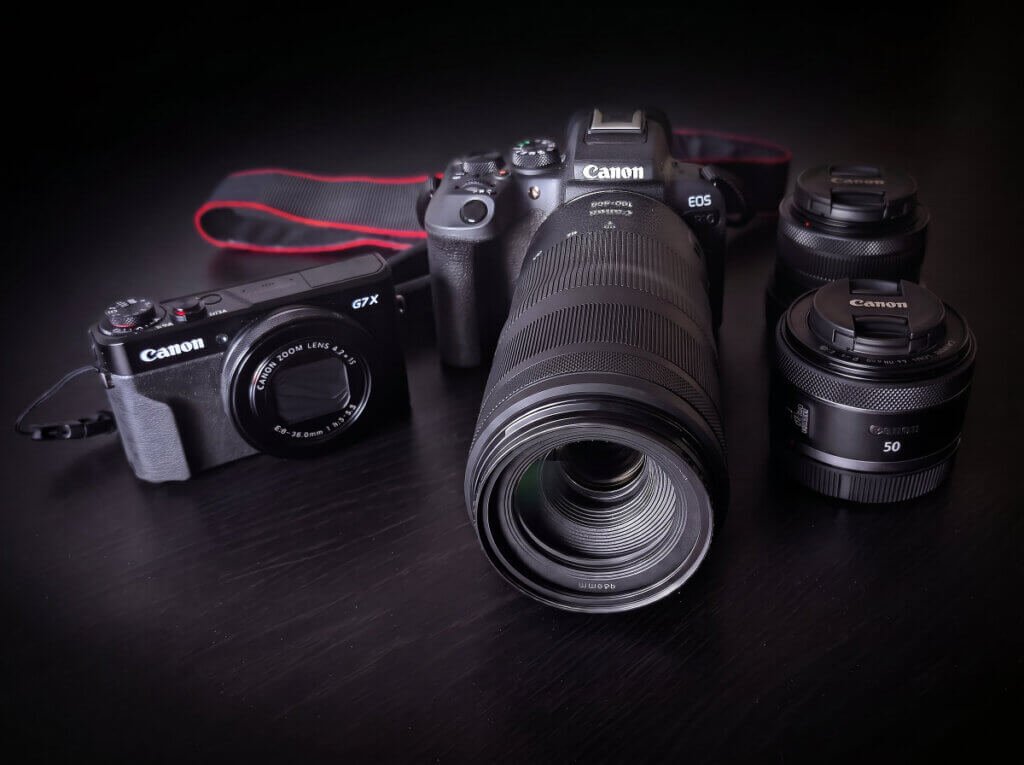
Today, my kit bag is carefully curated to offer maximum versatility without sacrificing my physical comfort. It is built around three distinct lenses and two reliable bodies:
- The Workhorse Body: Canon EOS R10 (Mirrorless APS-C)
- The Glass Trio:
- Wide–Angle Lens – Essential for sweeping beach panoramas and grand landscapes.
- 50mm Lens – The classic, lightweight prime for sharp details and beautiful depth of field.
- 100-400mm Lens – My absolute go-to lens for bringing distant wildlife into sharp focus.
- The Pocket Companion: Canon PowerShot G7 X Mark II – A premium, pocket-sized compact that I use exclusively for lightweight travel when I want to leave the camera bag behind entirely.
- The Constant Anchor: A trusty Manfrotto tripod. This is the one piece of gear that has stuck with me nearly from the very beginning of my journey, offering rock-solid stability from my early film days right through to today.
Photography isn’t about how much heavy glass you can carry; it’s about having the right tools that allow you to stay out in nature, pain-free or at least more manageable, waiting for that perfect moment to unfold.
You don’t always need expensive factory gear to get unique shots. Read about how I hacked a custom solar filter onto my 100-400mm lens in my guide to chasing the eclipse photography.
To see how these lenses performed under challenging, real-world conditions, take a look at my recent 3-Day Photo Journey through Krakow and Auschwitz.
Leave a Reply